



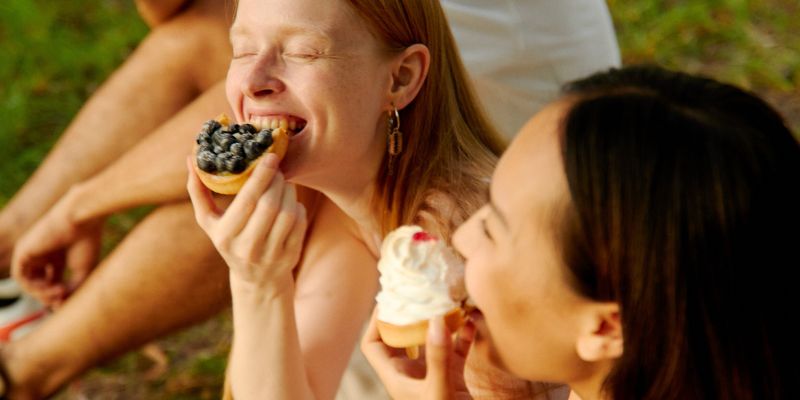
Texture Is the New Flavor: How Multisensory Desserts Are Reshaping the U.S. Pastry Market
From crispy croissants filled with silky cream to chewy mochi, molten cake centers and crunchy inclusions, texture has become one of the most powerful tools for creating memorable desserts. Here is what pastry chefs, bakeries and food manufacturers should know about America’s growing appetite for multisensory indulgence.
Flavor may be the first thing consumers mention when describing a dessert, but texture is often what makes them remember it.
The crack of a chocolate shell. The pull of a soft, chewy cookie. The contrast between a crisp tart crust and a smooth fruit curd. The rush of a molten center breaking through a warm cake.
These physical sensations turn an ordinary dessert into an experience and increasingly influence what American consumers order, photograph, share and purchase again.
Puratos’ Taste Tomorrow research found that 72% of global consumers enjoy trying foods with different textures. Texture is especially influential among millennials, 68% of whom say it directly affects their purchasing decisions. More recent findings indicate that 71% of consumers consider texture an important contributor to food enjoyment.
For bakeries, pastry chefs, foodservice operators and manufacturers, texture is no longer simply a technical attribute. It is a product-development strategy, a marketing message and a way to create a recognizable brand identity.
Why Texture Matters More Than Ever
Modern consumers expect desserts to engage more than taste alone. A successful product may be creamy, crispy, airy, chewy and gooey, sometimes within the same bite.
This is particularly visible in desserts that have become social-media sensations. Dubai-style chocolate combines a firm chocolate shell with creamy pistachio filling and crunchy kataifi. Basque cheesecake offers a deeply caramelized exterior surrounding a soft, custard-like center. Mochi ice cream contrasts an elastic rice-dough wrapper with a smooth frozen filling.
These products succeed partly because their texture can be understood immediately in a photograph or short video.
A knife cuts into a cheesecake and reveals a soft center. A croissant is pulled apart to expose its laminated layers. A spoon cracks through a chocolate shell. A cookie breaks open and releases a flowing filling.
The product demonstrates its value before the consumer even tastes it.
Texture-focused innovation is also becoming increasingly visible in the American product pipeline. Innova Market Insights reported that Asian-inspired textures, including crispy and chewy formats, represented 8% of U.S. product launches in 2025, reflecting continued interest in globally inspired, multi-texture experiences.nd Bakeries in adapting recipes and concepts before trends become mainstream.
The American Sweet Spot: Familiar Flavor, Unexpected Texture
Rather than replacing familiar desserts entirely, many successful concepts combine a recognizable flavor with a new texture, format or filling. A chocolate chip cookie becomes thicker, softer and filled with ganache. Cheesecake becomes a handheld bite. A croissant receives a fruit center, cookie topping or brûléed finish. Soft serve is layered with cake pieces, sauces, crunchy crumbs and inclusions.
This strategy gives consumers the reassurance of a flavor they already understand while adding enough novelty to make the experience feel new.
Mintel’s analysis of U.S. dessert and confectionery trends describes this opportunity as subtle innovation: approachable twists on classic dessert flavors and formats. Datassential similarly recommends reinventing Basque cheesecake through formats such as mini bites, tiramisu hybrids, seasonal spices and ube-coconut variations.
For pastry professionals, the opportunity is not necessarily to add more components. It is to create a clearer contrast between a small number of well-executed ones.
What American Pastry Chefs Say About Texture
Many of America’s most influential pastry chefs build desserts around contrast rather than complexity alone.
New York pastry chef Mark Welker has explained that when eating dessert, he looks for contrasts in both texture and temperature, supported by flavors that are balanced, clean and not overly sweet.
Chef and bakery founder Dominique Ansel has similarly described food as being about “texture, temperature, and emotion.” Recalling warm French baguettes from his childhood, he highlighted the contrast between a crunchy crust and a tender, steaming interior.
American chef Duff Goldman has also spoken about adding crunchy elements to ice cream, even when eating it from a bowl, illustrating how a simple inclusion can make a familiar dessert more satisfying.
These perspectives point toward the same principle: texture should support the emotional and sensory story of a dessert, not simply add technical complexity.
Creamy, Crispy, Chewy and Gooey: The Textures Driving Innovation
1. Creamy and Custardy
Creamy textures remain closely connected to comfort and indulgence.
Cheesecake, pastry cream, crème brûlée, panna cotta, custard pies, whipped ganache and soft-serve desserts deliver a familiar sense of richness. Basque cheesecake is especially well positioned because it combines a rustic appearance, a caramelized exterior and a soft center with a production process that can be less labor-intensive than more elaborate decorated cheesecakes.
Food Business News has identified cheesecake as a potential successor to the Dubai chocolate phenomenon because it naturally combines a crunchy crust, creamy filling and opportunities for sweet inclusions.
For operators, creamy bases also offer versatility. One well-designed cream, custard or cheesecake base can support multiple seasonal variations through fruit, chocolate, caramel, coffee, spices or crunchy toppings.
2. Crispy and Flaky
Few textures communicate freshness as effectively as crispness.
The sound of a croissant shell breaking or a chocolate coating cracking creates an immediate quality signal. Laminated pastry is therefore becoming a major canvas for innovation, moving beyond traditional breakfast applications into premium desserts, hybrid pastries and portable snacks.
Croissants can now be filled with fruit, pastry cream, ganache or caramel; topped with cookie dough or craquelin; shaped into cubes and wheels; or finished with glazes and crunchy inclusions.
This movement also creates a bridge between bakery and pastry. Operators can use the portability and familiarity of viennoiserie while incorporating the layered fillings and finishes typically associated with plated desserts.
3. Chewy, Bouncy and Elastic
Asian dessert traditions are expanding America’s texture vocabulary.
Mochi, Japanese cheesecake, milk bread, boba, rice cakes, tapioca pearls and chewy cookies offer sensations that differ from the traditional American preference for either soft cake or crisp cookies.
Datassential reports that several globally inspired desserts—including mochi and churros—are among the faster-growing desserts on U.S. menus. The research company also found that 39% of consumers consider globally inspired frozen desserts highly appealing, with even stronger interest among younger consumers.
For product developers, these textures provide an opportunity to introduce cultural inspiration through a sensory experience, even when the accompanying flavor remains familiar.
4. Molten, Flowing and Filled
A flowing center instantly creates drama.
Molten chocolate cakes, stuffed cookies, filled donuts, lava cheesecakes, fruit-filled pastries and soft-centered brownies are highly compatible with short-form video because the consumer can see the internal contrast being revealed.
The challenge is controlling that experience consistently. Fillings must remain stable during production, storage, freezing, baking and service while still providing the desired flow or softness when consumed.
That balance requires careful consideration of water activity, viscosity, bake stability, freeze-thaw performance and moisture migration.
5. Crunchy Inclusions
Crunchy elements provide one of the simplest ways to upgrade an existing product.
Caramelized nuts, streusel, cookie pieces, feuilletine, chocolate pearls, toasted grains, seeds and crisp meringue can transform an otherwise uniform mousse, cream or cake.
Crunch also creates an audible experience. This is especially valuable in digital marketing, where ASMR-style videos amplify the crack, snap and crumble of food.
Market Opportunities: In a crowded market, quiet luxury stands out, emphasizing quality and subtlety over gimmicks. Premium bakeries can leverage aesthetic differentiation to position products as luxury or boutique. Calm, refined design cues appeal to affluent, design-conscious, and gift-oriented consumers, elevating brand perception and value.
Social Media Is Changing the Way Desserts Are Designed
Today’s pastries must perform in two places: on the palate and on the screen.
Static beauty remains important, but video rewards movement and transformation. Desserts that crack, stretch, flow, break, pull apart or reveal layers create content naturally.
This does not mean every product should be exaggerated or overloaded. In fact, the most effective social-media moments are often simple:
- Cutting through a glossy shell
- Pulling apart a laminated pastry
- Scooping a soft cheesecake center
- Piping cream into a donut
- Pouring sauce over a warm dessert
- Breaking a cookie to reveal its filling
- Sprinkling crisp inclusions over a smooth cream
These moments give consumers visual evidence of freshness, generosity and craftsmanship.
For brands and operators, texture language should also appear in product names and descriptions. Terms such as crispy, silky, whipped, molten, flaky, gooey, chewy and crunchy provide a stronger sensory promise than flavor names alone.
This remains an underused opportunity. Mintel reported in 2026 that 59% of new snack products made no texture claim, despite rising consumer interest. Brands that communicate texture clearly may therefore have an advantage both online and at the point of purchase.
Consumers Still Want Cleaner, More Transparent Products
The demand for indulgent texture exists alongside growing scrutiny of ingredients.
According to the International Food Information Council’s 2025 Food & Health Survey, eight in ten Americans consider how processed a food is before purchasing it. However, consumer attitudes are nuanced: 39% either do not actively avoid processed foods or do not consider processing when making a purchase.
This suggests that consumers are not rejecting convenience or food technology entirely. They are seeking understandable value: recognizable ingredients, clear benefits, transparency and products that perform as expected.
Earlier U.S. bakery research found that:
- 62% of consumers preferred breads made with simple, recognizable ingredients.
- 65% sought shorter ingredient lists.
- 56% carefully read nutrition or ingredient labels.
- 74% said they would consider switching brands for more detailed product information.
For pastry developers, the objective is therefore not simply to remove ingredients. It is to create formulations that consumers understand while maintaining the structure, stability and eating quality that professional operations require.
Why Reducing Sugar and Fat Is a Technical Challenge
Sugar and fat do much more than provide sweetness and richness.
Sugar contributes solids, moisture control, browning, freezing behavior, preservation and gel formation. Fat carries flavor, creates tenderness, stabilizes emulsions and affects how quickly a product melts in the mouth.
Reducing either ingredient without reformulating the complete system can lead to unintended results:
- Fruit fillings may release water.
- Mousses may feel thin or disappear too quickly on the palate.
- Cakes may become dry.
- Frozen desserts may become icy.
- Ganaches may split or lose viscosity.
- Pastries may soften during storage.
- Products may perform inconsistently after freezing and thawing.
Successful reformulation is therefore about balance rather than subtraction. Pectins, fibers, starches, proteins, gums and other functional ingredients can help rebuild texture, but they must be selected according to the specific application and processing conditions.
The goal should be a clean, understandable formulation that delivers reliable professional performance, not a shorter label at the expense of quality.
Texture Must Survive Real-World Foodservice Conditions
A dessert may be perfect immediately after preparation and still fail during service.
In the U.S. market, products often need to withstand central production, freezing, thawing, refrigerated display, delivery, grab-and-go merchandising or transportation between facilities.
With 64% of U.S. adults snacking at least once a day, portable formats represent an important growth opportunity. Mini desserts are also returning to menus, supported by the popularity of dessert flights and smaller portions.
However, portability changes the technical requirements of a product. A successful grab-and-go dessert needs:
- A structure firm enough for handling and transportation
- Fillings that resist leaking
- Crisp components protected from moisture migration
- Creams that remain stable during refrigerated display
- Glazes and coatings that maintain appearance
- Consistent freeze-thaw performance
- A clean eating experience without excessive mess
The strongest concepts combine restaurant-quality indulgence with operational practicality.
Examples include filled croissants, mini cheesecakes, dessert bars, sandwich cookies, brownie bites, mochi-style frozen bites, individual tarts and handheld laminated pastries.
Opportunities for Bakeries and Food Manufacturers
The texture movement creates several practical innovation territories.
Reimagine familiar American desserts
Use recognizable foundations such as brownies, cheesecake, chocolate chip cookies, donuts, apple pie and carrot cake, but introduce a contrasting filling, crust, inclusion or topping.
Examples include:
- Brownie with a molten caramel center
- Cheesecake with a crisp cookie or kataifi base
- Apple pastry with flaky dough and a concentrated fruit filling
- Chocolate chip cookie with a soft ganache center
- Carrot cake with crunchy candied nuts and whipped cream-cheese filling
Modernize laminated pastry
Transform croissants, Danish and brioche into premium snackable desserts using bake-stable fruit fillings, pastry creams, ganaches and crunchy finishes.
Build desserts for multiple dayparts
Products such as filled brioche, cheesecake bites, cake bars and fruit pastries can move between breakfast, afternoon snacking, coffee service, catering and dessert menus.
Pair global textures with familiar flavors
A chewy mochi-style format can use strawberry, chocolate or peanut butter. A Basque cheesecake can feature apple, pumpkin or maple. A croissant can combine pistachio-kataifi texture with familiar chocolate or raspberry.
Design for video from the beginning
Before launching a product, ask:
- What happens when it is cut?
- Does it crack, stretch, flow or reveal layers?
- Can the texture be understood without tasting it?
- Is there one strong visual moment worth filming?
- Does the product look as appealing after transportation or display?
How PastryStar Helps Build Better Texture
At PastryStar, we develop professional pastry and bakery ingredients designed to help chefs, food manufacturers and foodservice operators create consistent texture without sacrificing flavor or operational efficiency.
Depending on the application, PastryStar solutions can support:
- Smooth and stable pastry creams
- Bake-stable and freeze-thaw-stable fruit fillings
- Silky ganaches and chocolate finishes
- Creamy panna cotta and crème brûlée applications
- Molten cake centers
- Consistent cake and brownie structures
- Fruit-forward curds and dessert fillings
- Ice cream and frozen-dessert stabilization
- Clean-label product development
- Labor-saving production and repeatability at scale
Our goal is not to replace creativity. It is to give pastry professionals a reliable foundation from which they can create.
Because when structure, stability and process are under control, chefs have more freedom to focus on flavor, presentation and the sensory experience.
The Future of Pastry Is Multisensory
The next generation of successful desserts will not be defined by flavor alone.
Consumers increasingly want products that are visually compelling, texturally expressive, globally inspired, portable and made with ingredients they can understand. At the same time, operators need desserts that are consistent, efficient and durable enough for real-world production and service.
The opportunity lies in bringing those expectations together.
A memorable dessert does not need dozens of layers. It needs intention: a crisp element that stays crisp, a cream that feels silky, a filling that performs correctly and a contrast that consumers can see, hear and taste. In modern pastry, texture is more than a finishing detail. It is part of the recipe, part of the experience and increasingly part of the brand.
Ready to develop desserts with more contrast, stability and consumer appeal?
PastryStar works with pastry chefs, food manufacturers, bakeries and foodservice operators to develop clean-label, labor-saving ingredients for consistent professional results.
Contact our team to discuss your next pastry or bakery application.


Tags and Categories