


Food Ingredient Development: From Challenge to Custom Solution
Creating a successful bakery or pastry product is about more than developing a great recipe. At commercial scale, an ingredient also needs to work with your equipment, withstand your production process, deliver consistent results from batch to batch, meet cost and ingredient requirements, and ultimately create the taste and texture your customers expect. Sometimes, an existing ingredient checks every box. Other times, it doesn’t.
That’s when custom food ingredient development can become a valuable part of the product development process. Whether you’re launching a new product, scaling an existing recipe, reformulating for a cleaner ingredient statement, or trying to solve a production challenge, working with an experienced ingredient manufacturer can help turn an idea, or a problem into a commercially viable solution.
At PastryStar, our team of chefs and food scientists works with bakeries, food manufacturers, retailers, foodservice operators, and other food businesses to develop solutions around their specific applications and production needs.
Have a product challenge you haven’t been able to solve?

When Do You Need a Custom Food Ingredient?
Not every application needs a custom formulation.
With hundreds of existing bakery and pastry ingredients available, the right solution may already exist. But when an off-the-shelf ingredient doesn’t quite fit your product or production process, customization can help bridge the gap.
Here are some of the most common situations where custom food ingredient development may make sense.
1. You’re Scaling a Recipe for Commercial Production
A recipe that works perfectly in a pastry kitchen does not always behave the same way when produced at a larger scale.
Commercial production introduces new variables: larger equipment, different mixing times, automated depositing, temperature changes, storage requirements, freezing and thawing, and longer distribution cycles.
An ingredient may therefore need to be reformulated or adapted to maintain the flavor, texture, appearance, and performance of the original product at scale.
2. Your Current Ingredient Doesn’t Work With Your Equipment
Your equipment and your ingredients need to work together.
A filling that is too thick may not deposit properly. A product that is too fluid may create problems during production. A mix may require preparation steps that don’t fit your existing process.
Instead of changing an entire production line around an ingredient, a custom solution can potentially be developed around the needs of your operation.
3. You Need a Specific Texture or Viscosity
Texture isn’t just part of the eating experience, it can also affect how an ingredient behaves during production.
Depending on the application, you may need a filling that can be injected, spread, deposited, layered, baked, frozen, or pumped through specific equipment.
The right viscosity and texture can help improve both production efficiency and finished-product consistency.
4. You Need Better Bake or Freeze-Thaw Stability
Commercial bakery products often experience conditions that don’t exist in small-scale preparation.
A filling may need to withstand baking without leaking. A pastry cream may need to maintain its texture after freezing and thawing. A finished dessert may need to perform consistently throughout storage and distribution.
Ingredient performance needs to be considered throughout the entire life of the finished product, not only when it leaves the kitchen.
5. You Have Specific Ingredient or Labeling Requirements
Today’s food businesses often develop products around specific ingredient standards or customer expectations.
That might mean removing an ingredient, adjusting a formulation, increasing fruit content, developing a plant-based alternative, or working toward a cleaner and simpler ingredient statement.
When an existing product doesn’t meet those requirements, custom formulation can provide another path forward.
6. You Want to Create Something Different
Sometimes there isn’t a production problem at all. You simply want a product your competitors don’t have. A distinctive flavor, texture, fruit percentage, dessert concept, or signature ingredient can help create differentiation in a crowded market.
Custom development allows food businesses to go beyond what is already available and explore solutions built specifically around their product vision.
Trying to solve one of these challenges?
Off-the-Shelf vs. Custom Formulation: Which Is Right for You?
Custom isn’t automatically better. The best ingredient is the one that delivers the right performance, quality, consistency, and economics for your operation. If an existing product already meets your requirements, choosing an established formulation can offer several advantages, including faster implementation and less development work.
PastryStar offers a broad portfolio of commercial bakery and pastry ingredients across fillings and jams, pastry mixes and bases, glazes and ganaches, flavors and pastes, and specialty bakery ingredients.
But sometimes the closest available product still isn’t quite right. Perhaps you like the flavor but need a different viscosity. Maybe the texture is right but the ingredient statement doesn’t meet your requirements. Or perhaps you’re developing something completely new. That’s where custom development comes in.
Rather than forcing an existing product into an application where it doesn’t belong, our team can evaluate the challenge and determine whether an existing product, an adaptation, or a new formulation makes the most sense.
Not sure which option you need?
What Should You Know Before Starting a Custom Ingredient Project?
You don’t need to arrive with a finished technical brief. In fact, many custom projects begin with a problem:
- “Our filling leaks during baking.”
- “We need to simplify this production process.”
- “We love this product, but we need a cleaner ingredient statement.”
- “We’re trying to scale this recipe and can’t maintain the same texture.”
- “We want to create something like this, but better.”
Those are all useful starting points. However, the more your ingredient development partner understands about the application, the easier it becomes to identify the right direction. Here are some of the questions worth considering.
What Are You Making?
The finished application is one of the most important pieces of information. A fruit filling intended for a Danish may need different characteristics than one used in a layer cake, cookie, pie, or industrially produced pastry. Exactly how the ingredient will be used helps define what it needs to do.
How Will the Ingredient Be Processed?
Will it be:
- Baked?
- Frozen and thawed?
- Whipped?
- Deposited?
- Pumped?
- Spread?
- Mixed with another ingredient?
- Used directly from the container?
Processing conditions can dramatically change the technical requirements of a formulation.
What Equipment Are You Using?
Commercial equipment can influence everything from viscosity requirements to preparation methods. Understanding the production environment early in the project can help prevent a common problem: developing an ingredient that performs beautifully in a test kitchen but doesn’t work efficiently on the actual production line.
What Does the Finished Product Need to Taste Like?
Flavor and texture remain essential. Is the goal intensely fruity or more subtle? Smooth or chunky? Rich or light? Firm or creamy? A benchmark or existing product can also help communicate the desired result.
Are There Specific Ingredient Requirements?
Depending on the project, you may have requirements involving ingredients, allergens, certifications, nutritional objectives, or clean-label positioning. These parameters should be identified early because they can influence how the formulation is developed.
What Are Your Cost and Volume Targets?
A commercially successful formulation has to work financially as well as technically. Understanding expected production volumes and target costs helps ensure that development is grounded in the realities of the final application.
From Test Kitchen to Production Line: Why Scaling Matters
One of the most important, and sometimes overlooked, parts of food product development is commercial scalability. A formulation can perform perfectly at bench scale and behave differently when produced in significantly larger quantities.
Why?
Because scale changes the process. Mixing times can change. Heating and cooling behave differently. Ingredients may hydrate differently. Equipment creates different levels of shear. Filling and depositing methods introduce additional variables.
That means commercial food product development needs to consider more than taste alone. Depending on the application, technical characteristics such as Brix, pH, water activity, moisture content, viscosity, and color can help establish measurable standards for consistent production.
This is particularly important when producing at scale, where the objective isn’t simply to make one successful batch. It’s to make the same successful product, batch after batch.
At PastryStar, commercial production and repeatability are built into our approach to custom development.
What Types of Bakery and Pastry Ingredients Can Be Customized?
Custom development can apply across many bakery and pastry applications.
Fruit Fillings & Jams
Fruit-based products can require different characteristics depending on the finished application. Customization may involve factors such as:
- Fruit content
- Flavor profile
- Sweetness
- Texture
- Fruit piece size
- Viscosity
- Bake stability
- Freeze-thaw performance
A filling designed for a pie, for example, may have very different technical requirements from one designed to be injected into a croissant on a production line.
Pastry Mixes & Bases
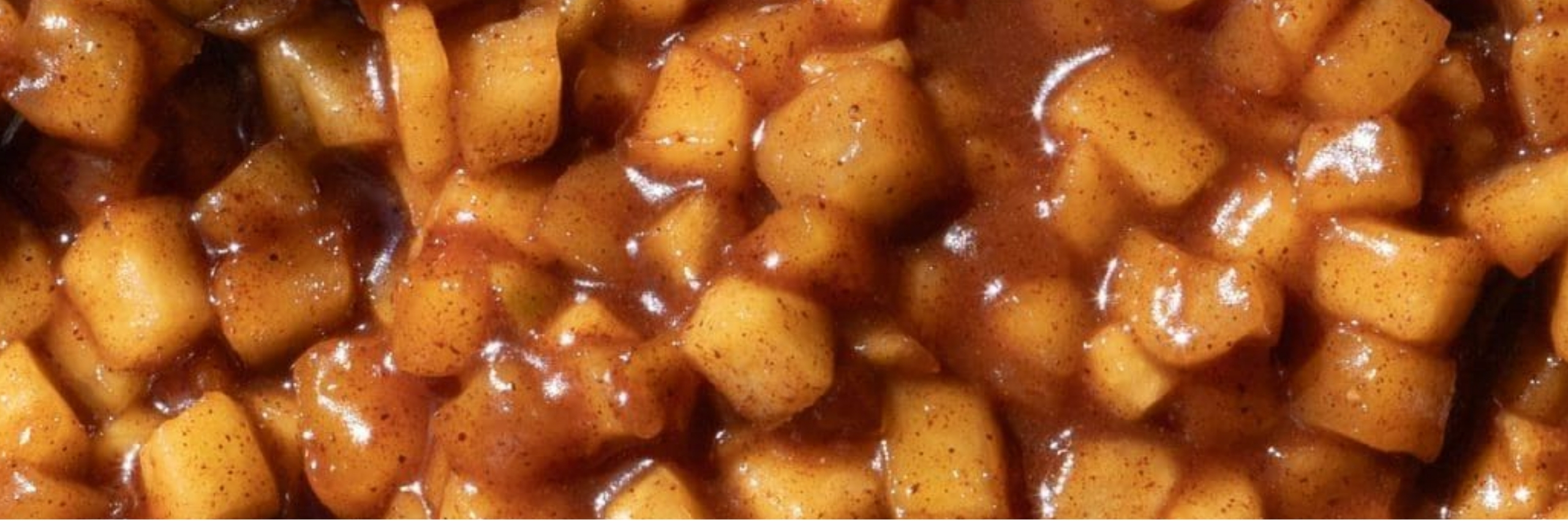
Commercial pastry mixes can help simplify preparation, reduce labor requirements, and improve consistency.
Depending on the application, formulations can also be evaluated around specific preparation methods, equipment, finished textures, and production objectives.

Glazes, Ganaches & Fondants
For finishing applications, appearance and technical performance often go hand in hand.
Viscosity, shine, coverage, texture, flavor, and handling can all influence how a glaze or ganache performs in a commercial environment.
Flavors & Pastes
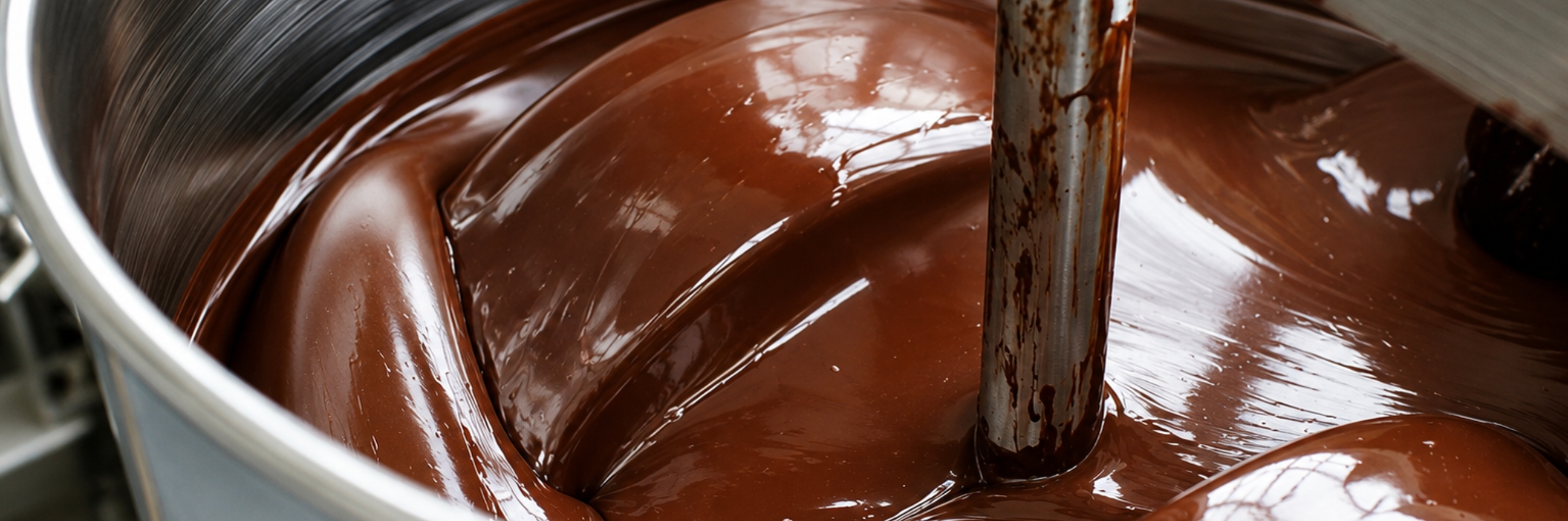
Custom flavor development can help create a distinctive profile for a new product or adapt an existing concept to better meet the desired application.
Flavor intensity, format, color, and how the ingredient interacts with the finished recipe can all be considered.
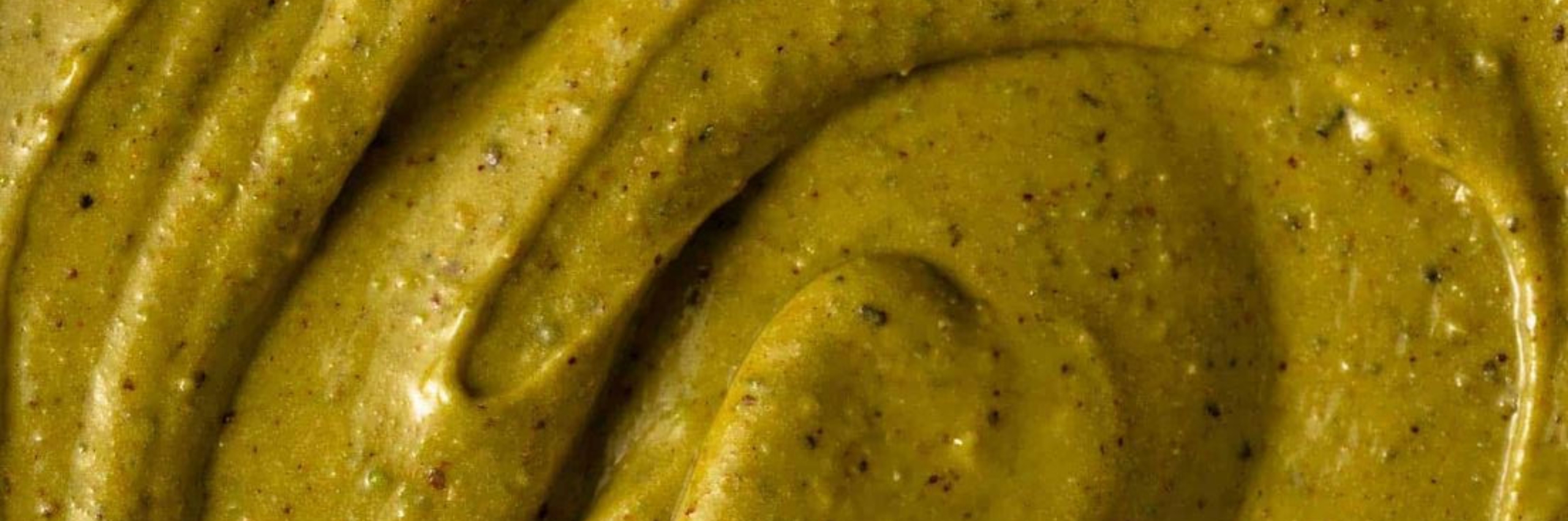
What About Custom Clean-Label Ingredient Development
For many food businesses, the challenge isn’t only how an ingredient performs.
It’s also what goes into it.
Clean-label product development can involve simplifying an ingredient statement, replacing artificial ingredients, or creating a formulation around recognizable ingredients while maintaining the performance required by a commercial operation.
That last part is important.
Removing or replacing an ingredient can affect texture, stability, shelf life, processing, flavor, and appearance. Successful reformulation therefore requires looking at the product as an entire system rather than simply removing one ingredient from a formula.
At PastryStar, clean label is a core part of our approach to bakery and pastry ingredients.
Questions to Ask Before Developing a Custom Food Ingredient
Before starting a custom formulation project, consider these questions:
1. What problem are we trying to solve?
Start with the reason the existing solution isn’t working.
2. What does the ingredient need to do?
Think about both production performance and the final eating experience.
3. What processing conditions will it experience?
Baking, freezing, depositing, mixing, storage, and distribution can all matter.
4. What are our non-negotiables?
Identify ingredient, labeling, certification, flavor, texture, or cost requirements early.
5. What does success look like?
A clear benchmark makes development easier to evaluate.
6. Can the solution scale?
Consider how the formulation will move from development to regular commercial production.
7. Do we need something custom at all?
An experienced ingredient partner should also be able to identify when an existing solution already meets your needs.
Why Work With an Ingredient Manufacturer During Product Development?
Product development sits at the intersection of several disciplines.
- The finished product needs to taste great.
- The formulation needs to work technically.
- The ingredient needs to perform during production.
And the final solution needs to be commercially realistic.
Working directly with an ingredient manufacturer gives product developers access to expertise beyond formulation alone.
At PastryStar, our team combines culinary expertise, food science, R&D, manufacturing, and quality control to help customers address challenges across the development process. We manufacture both wet products and powder mixes in the United States and work with customers ranging from artisan and commercial bakeries to foodservice providers, retailers, and industrial operations.
The objective is simple: Develop the right solution for the product, not force the product around the ingredient.
Have a Product Challenge? Let’s Solve It.
- Maybe you’re developing a new product.
- Or you’re trying to scale an existing recipe.
- Maybe something on your production line simply isn’t working the way you need it to.
- Or maybe you know exactly what you want, but can’t find it on the market.
You don’t need to have the solution before contacting us. That’s where the conversation starts. PastryStar’s team of chefs and food scientists can help evaluate your application, production requirements, ingredient goals, and current challenges to determine the right path forward.
- It may already exist.
- It may need to be adapted.
- Or we may need to develop something new.
Let’s find out.
Frequently Asked Questions About Custom Food Ingredient Development
Custom food ingredient development involves creating or adapting an ingredient around the specific requirements of a finished product or production process. This can include changes to flavor, texture, viscosity, ingredient composition, stability, processing performance, or other characteristics.
A custom solution may make sense when existing ingredients don’t meet your technical, sensory, production, labeling, or cost requirements. It can also be useful when developing a differentiated product that isn’t currently available on the market.
No. A custom development project can begin with a concept, benchmark, existing formulation, or simply a production challenge. Our team can help identify the technical parameters needed to move the project forward.
Depending on the product and project requirements, adapting an existing formulation may be an option. PastryStar can evaluate whether an existing product, modified solution, or new formulation is the most appropriate path.
Yes. PastryStar specializes in clean-label bakery and pastry ingredients and can evaluate custom formulations based on specific ingredient and application requirements.
Once the formulation and specifications are approved, the focus moves toward successful commercial production and consistency. PastryStar establishes measurable product and process parameters to help ensure the finished ingredient can be reproduced reliably from batch to batch.
Start by telling us about your finished product, application, production process, current challenges, and desired result. From there, our team can determine whether an existing PastryStar product or custom development is the best solution.
Ready to discuss your project?
Contact PastryStar


Tags and Categories