



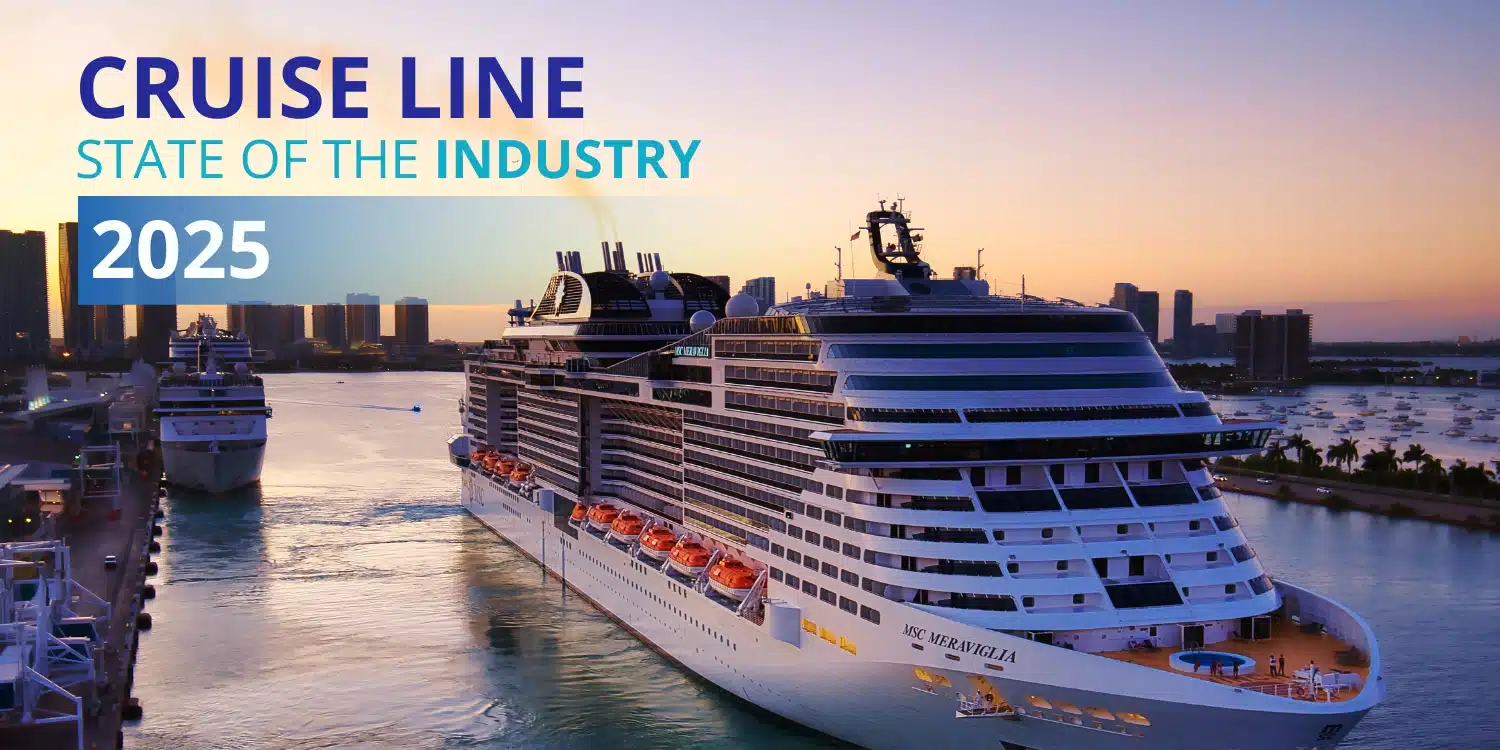
2025 Cruise Line State Industry
Cruise Industry Faces Tariff Pressures and Market Volatility in 2025
The 2025 Cruise Line Industry is a dynamic sector, marked by significant growth, technological advancements, and evolving consumer preferences. It finds itself at the intersection of economic uncertainty, shifting customer demands, and geopolitical headwinds. One of the most pressing concerns currently impacting the sector is the effect of trade tariffs and the resulting market volatility, forces that, while external, are increasingly shaping internal strategies across the industry. This year in Naples, the 40th edition of the Marine Hotel Association (MHA) took place. Here’s what you need to know…
2025 Cruise Line Industry Insights: Trends, Challenges, and Growth Opportunities

The 2025 Cruise Line Industry continues to demonstrate strong recovery and growth following the challenges of recent years, emerging as a key segment of the broader travel and tourism market. As of 2023, the global cruise market was valued at $8.9 billion, reflecting growing consumer confidence and renewed interest in experiential travel. In the U.S., which remains one of the largest and most mature cruise markets, revenue is expected to reach $3.6 billion in 2024, underscoring its continued dominance and appeal to both domestic and international travelers.
One of the driving forces behind this growth is the strategic importance of major U.S. ports. Miami stands out as the world’s leading cruise embarkation point, handling 10.3% of global embarkations. This is followed closely by Port Canaveral and Fort Lauderdale, reinforcing Florida’s critical role as the hub of North American cruise activity. These ports benefit not only from their geographic proximity to the Caribbean, one of the most popular cruise destinations, but also from their well-developed infrastructure and capacity to accommodate mega-ships and a high volume of passengers.
What’s the future for the 2025 Cruise Line State Industry?
Looking ahead, the future of the cruise industry appears highly promising. The global cruise market is projected to reach $18.3 billion in revenue by 2030, representing a significant compound annual growth rate (CAGR) of 12.9%. This optimistic outlook is driven by a combination of factors: expanding fleets with more sustainable and technologically advanced ships, a growing number of themed and luxury cruise offerings, and broader demographic appeal, with younger travelers and families showing increased interest in cruise vacations.
Additionally, innovations in health and safety protocols, flexible booking policies, and a focus on unique onboard experiences are enhancing customer satisfaction and driving repeat bookings. The industry is also making significant strides toward sustainability, investing in cleaner fuels, shore power technology, and more efficient ship designs, all of which are likely to attract a growing segment of environmentally conscious travelers.
In summary, with a strong post-pandemic rebound, robust infrastructure, and strategic growth initiatives, the cruise industry is poised to thrive in the coming years. Its ability to adapt and innovate, while continuing to offer a value-rich and memorable travel experience, positions it as one of the most dynamic sectors in today’s tourism landscape.
How Tariffs and Global Tensions Are Impacting Cruise Operations

While the cruise industry is not directly subject to recent tariff hikes between the U.S. and major trading partners like China and the EU, the downstream effects are unavoidable. Rising costs on imported steel (+12%), onboard electronics (+15%), and luxury goods such as wine and furniture (up to +18%) are tightening operating margins.
Carnival Corp., for example, reported a 4.7% year-over-year increase in operating expenses in Q1 2025 – a figure partially attributed to supply chain inflation and commodity tariffs. Fuel prices, which account for roughly 10–15% of total cruise operating costs, have also been erratic, with marine fuel surging 8% compared to last year due to geopolitical instability.
A Strategic, Measured Response
Instead of relying on reactive cost-cutting, major cruise lines are focusing on long-term risk mitigation. Royal Caribbean Group, for instance, has increased its supply sourcing from U.S. and Latin American suppliers by 22% to reduce tariff exposure. Norwegian Cruise Line Holdings has also adjusted its itinerary planning to minimize exposure to volatile fuel hubs, resulting in an estimated $30 million in annual savings.
Cruise Line are also working on maintaining financial agility. Carnival reported holding over $6 billion in liquidity at the end of 2024, reflecting a strategic buffer against ongoing economic unpredictability.
Consumer Confidence and Pricing Transparency

Transparency for more loyal clients
Despite macroeconomic headwinds, demand remains remarkably strong. According to CLIA (Cruise Lines International Association), 31.5 million passengers are expected to cruise in 2025, up from 30 million in 2024 – and well above the pre-pandemic record of 29.7 million in 2019.
The industry has also taken note of growing consumer demand for clearer pricing. Following the implementation of California’s “Honest Pricing Law” in July 2024, cruise companies like Royal Caribbean and Norwegian have introduced nationwide transparent pricing, now displaying all-inclusive costs, including taxes, port fees, and gratuities, in their advertising.
What the Numbers Say
Surveys show the change is well received:
- 76% of cruise customers say they are more likely to book with brands that offer clear, upfront pricing up from 61% in 2023.
- Booking conversions increased by 12–18% on cruise websites that implemented transparent pricing models.
First-time cruisers reported a 20% higher satisfaction rate when booking with lines offering bundled pricing, compared to those using traditional “à la carte” models.
Cruise Industry Innovation Trends: Fueling Growth and Sustainability in 2025

Fleet expansion and technological advancements continue to drive the 2025 Cruise Line Industry forward, even amid global volatility. The industry is evolving rapidly, with its growth and innovation making it a fascinating topic to explore.
Sustainability in the center of the discussions
Cruise lines are actively improving sustainability in 2025 by implementing advanced wastewater treatment systems and connecting to shore power. MSC and Royal Caribbean are piloting AI-based energy management tools to reduce their environmental impact. These innovations help lower emissions, improve fuel efficiency, and ensure compliance with increasingly strict environmental regulations.
High technology and Innovation concepts
Beyond reducing environmental impact, cruise lines are revolutionizing the guest experience with smart cabins, wearable technology, and biometric boarding. The event highlighted smart adaptation and meaningful partnerships, further reaffirming MHA’s crucial role in the cruise industry’s evolution. Royal Caribbean’s SmartShip platform integrates facial recognition, mobile app control of staterooms, and real-time activity scheduling.
The Ultra-Luxury demand increasing
Meanwhile, the ultra-luxury and residential cruise segments are heating up. Crescent Seas’ $70 million transformation of the Seven Seas Navigator into a full-time residential vessel reflects a growing appetite for long-term, immersive cruise lifestyles: a trend particularly popular among retirees and digital nomads.
In Florida, home to the three busiest cruise ports in the world: Miami, Port Canaveral, and Fort Lauderdale, the Caribbean cruise market continues to set global trends. Miami recently welcomed Icon of the Seas, the world’s largest cruise ship, while Port Canaveral will debut its sister ship, Star of the Seas, this summer, further cementing Florida’s position as the heart of cruise innovation and passenger volume.


The Marine Hotel Association (MHA): Fostering Collaboration, Innovation, and Strategic Growth
The Marine Hotel Association (MHA), celebrated its 40th edition in 2025, marking four decades of driving collaboration, innovation, and excellence in cruise hospitality.
This milestone gathering brought together cruise lines, suppliers, and industry leaders to address the evolving challenges shaping the sector, from supply chain vulnerabilities to regulatory complexities. A major highlight was Royal Caribbean’s AI-powered inventory forecasting tool, which boasts 85% accuracy in predicting onboard needs based on guest demographics and route-specific trends.

Cruise lines are responding to geopolitical and environmental pressures by adopting local sourcing strategies. Some now source up to 80% of their products locally in Europe, reducing the use of shipping containers and emissions. The MHA also addressed pressing issues such as egg supply volatility, potential tariff disruptions, and the need for advanced digital procurement platforms. The event emphasized smart adaptation and meaningful partnerships. Additionally, it reaffirmed MHA’s role as a cornerstone in the cruise industry’s evolution, especially during times of change and opportunity.
PastryStar, onboard with cruise lines Chefs
PastryStar is a long-time partner of chefs on board cruise lines who want their customers to indulge in finest desserts. Crème brûlée, molten cakes, delicious ice creams, and other desserts, you name it, we’ve got you covered! Being a chef onboard can be a challenge: achieving high quality in high volume settings, dealing with space and equipment constraints, and creating consistency across ships. Fortunately, PastryStar offers ideal solutions to simplify your process, save time and labor, and ease your production flow without sacrificing quality or efficiency.


Follow us on Instagram & LinkedIn!

Sources :
Global Cruise Ships Market Size


Tags and Categories